
The Town With More Stories Per Square Metre Than Anywhere Else in Regional Australia
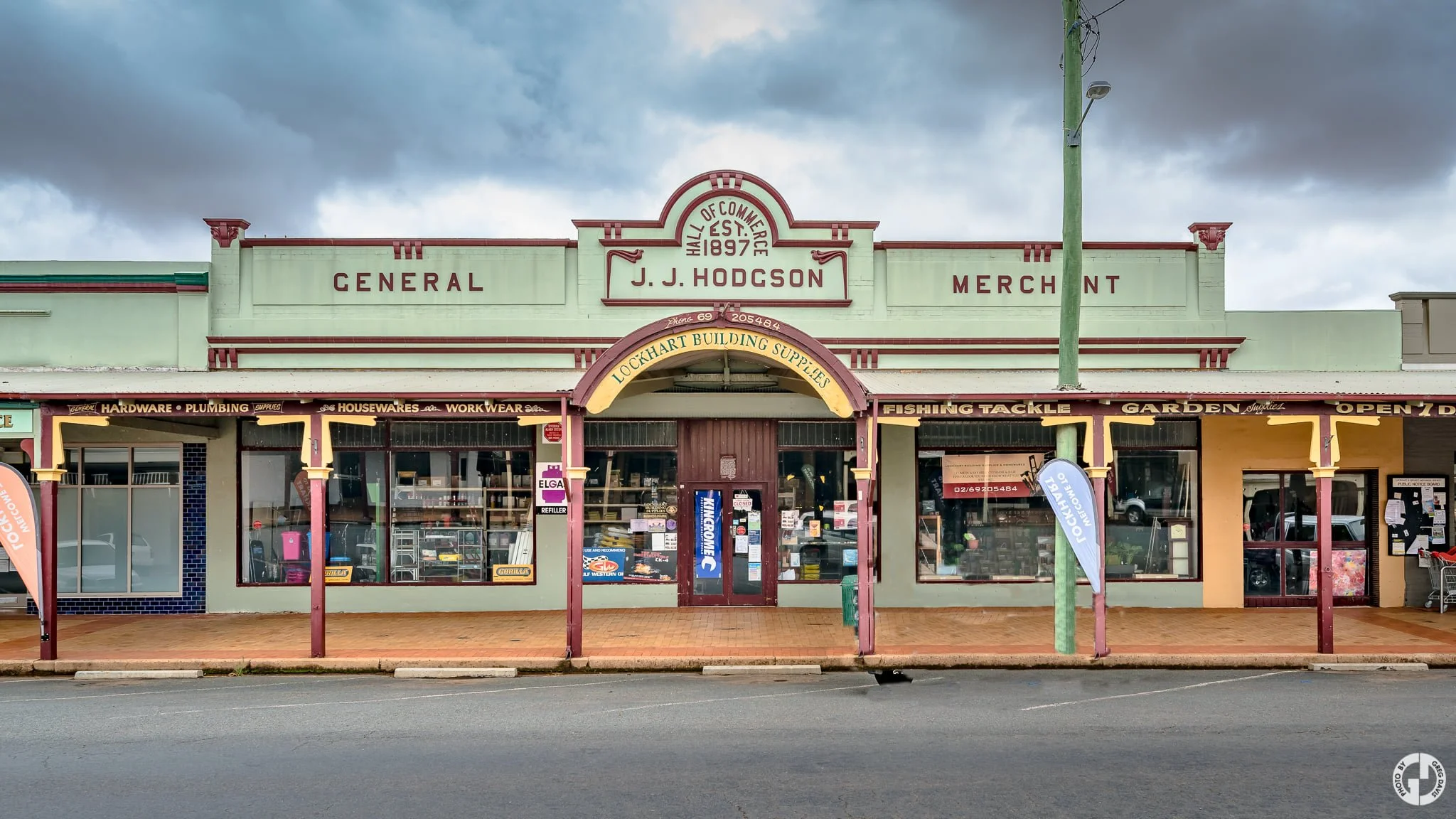
Lockhart, NSW. Explored visions by GD
Better than netflix.
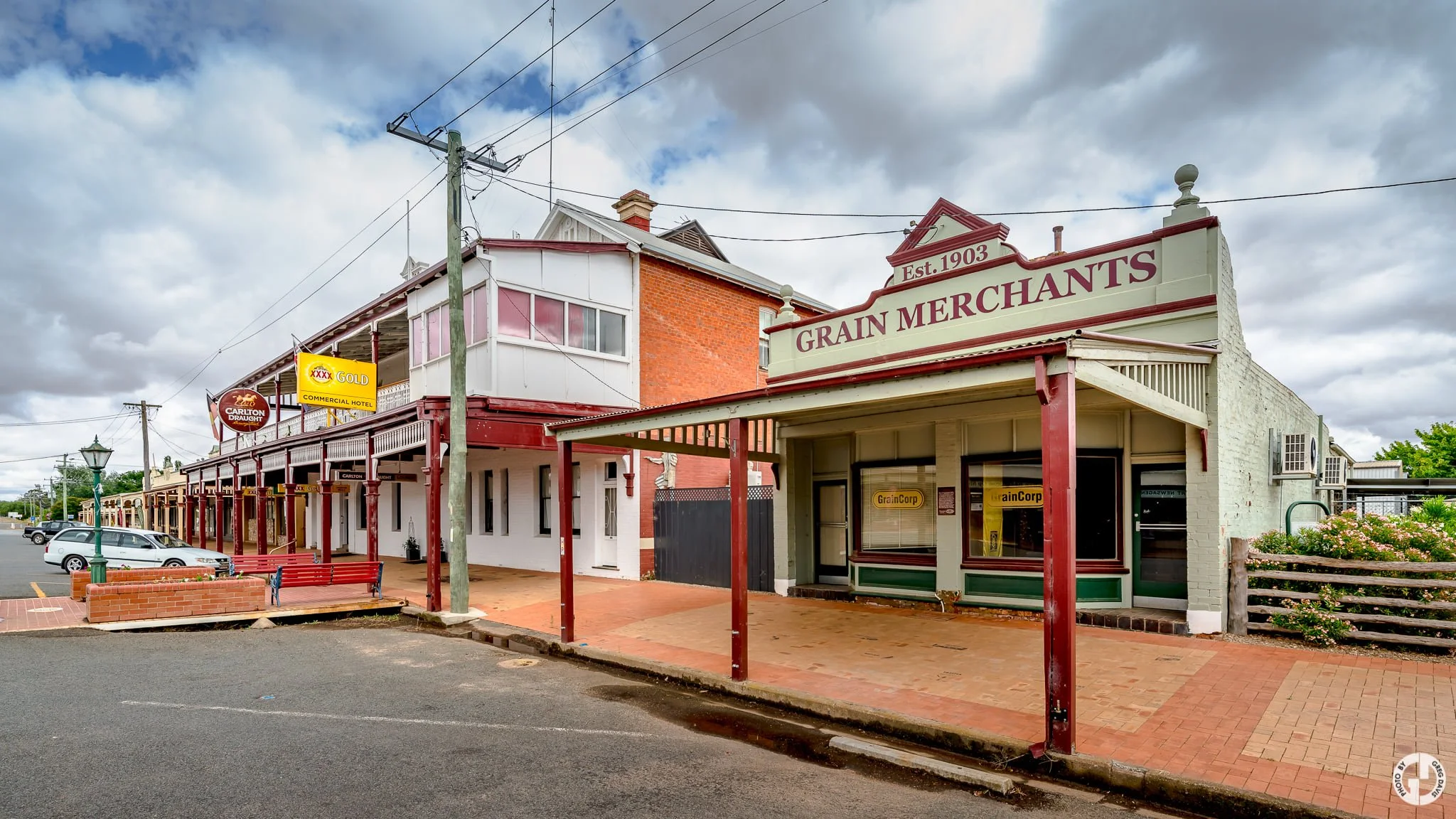
If you've ever blown past the Lockhart turn-off on the way to somewhere else, this is your formal notice that you've been making a mistake. Lockhart, a small town 65 kilometres southwest of Wagga Wagga in the heart of the Riverina, doesn't shout about itself. It doesn't need to. It just sits there, all wide iron verandahs and century-old brick, quietly being one of the most fascinatingly layered towns in regional New South Wales.
They call it the Verandah Town— and Green Street, the main drag, earns that nickname with every single building. But what the nickname doesn't quite prepare you for is just how many extraordinary stories are packed into a single afternoon's walk. Every façade is a chapter. Every former bank is a plot twist. Every pub has survived something.
Here's what you need to know before you go.
Some towns have history. Lockhart has receipts.
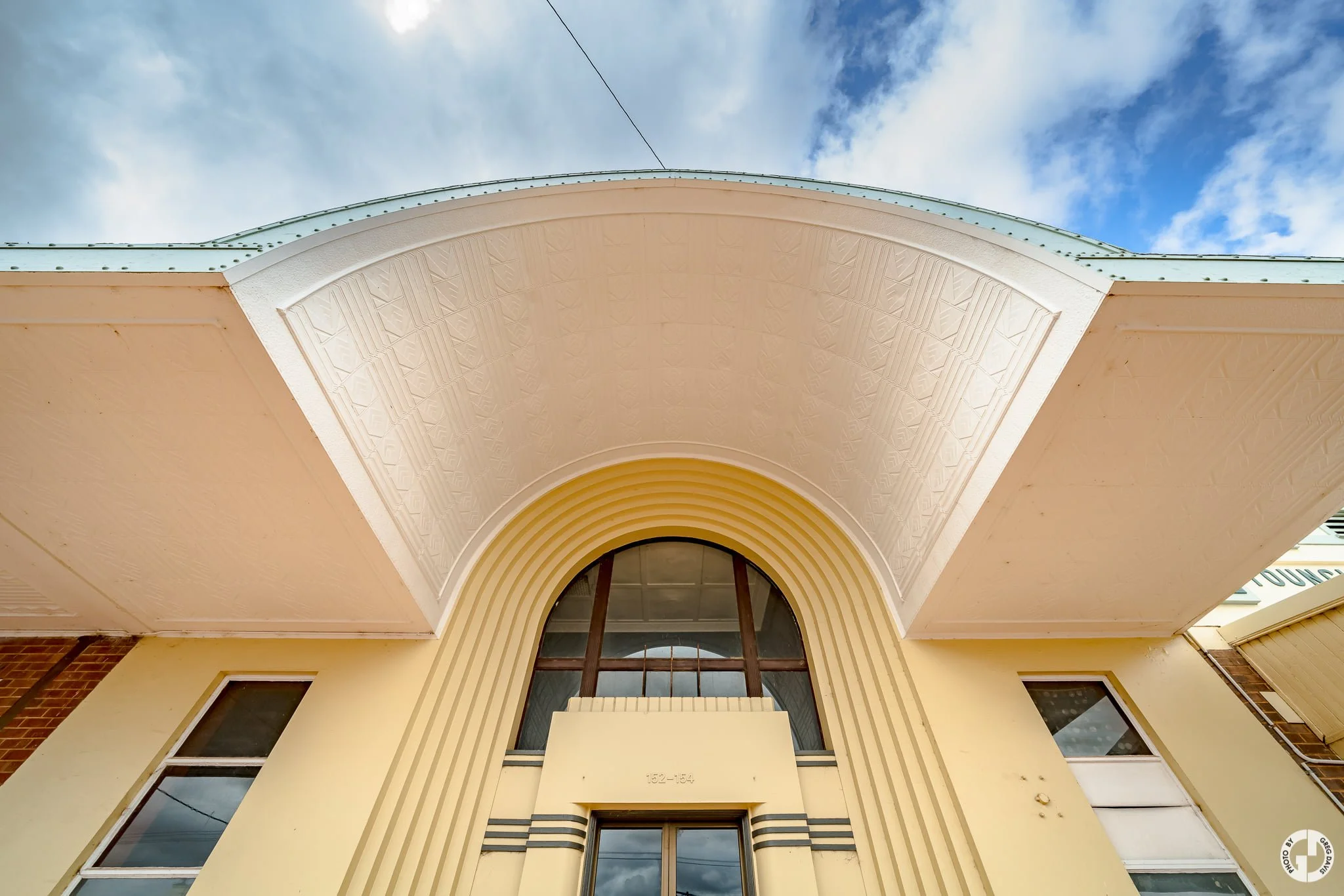
It’s called The ‘verendah Town’ For A Reason
Pull up on Green Street and take a moment before you start walking. What you're looking at is a rare thing: a main street where the heritage verandahs are still in situ, still doing their original job of shading the footpath, and still sitting above ground floor shopfronts that have been continuously occupied in one form or another since Federation. Green Street has earned National Trust classification — and walking it, you'll understand exactly why.
This isn't a restoration project or a heritage precinct that's been artificially preserved behind velvet rope. This is just a town that kept its buildings standing through good times and lean times alike, and never got around to knocking them down for a car park. Lucky us.
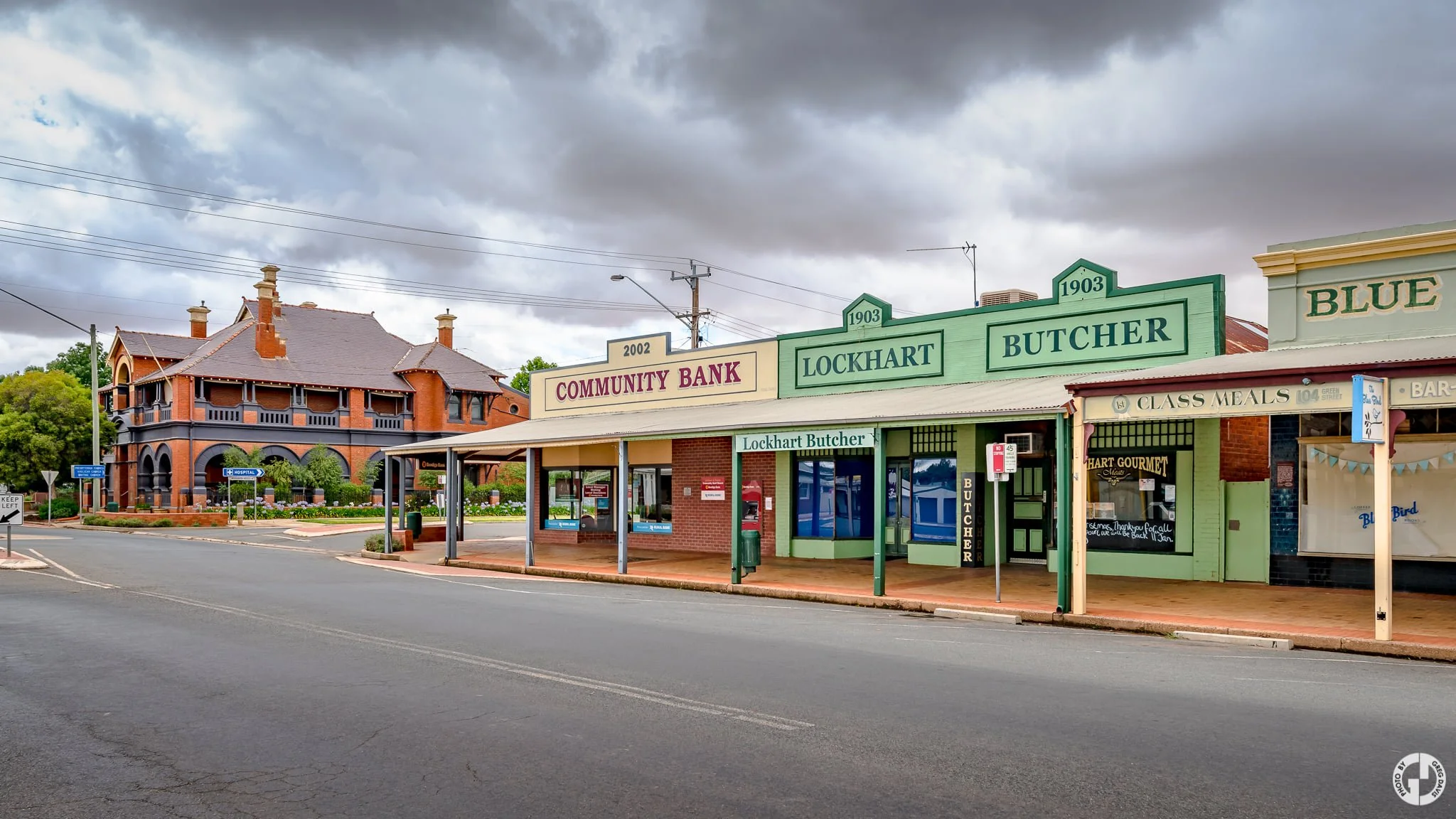
Five Banks. One Main Street. A Staggering Amount of Drama.
If there's a single thread that runs through Lockhart's architectural history, it's this: everyone wanted to bank here, and every bank wanted to build something impressive while doing it.
At its peak, Lockhart had five separate bank branches operating on its main street - extraordinary for a regional town of its size. Each one commissioned its own building, engaged its own architect, and tried to outdo the others in terms of grandeur.
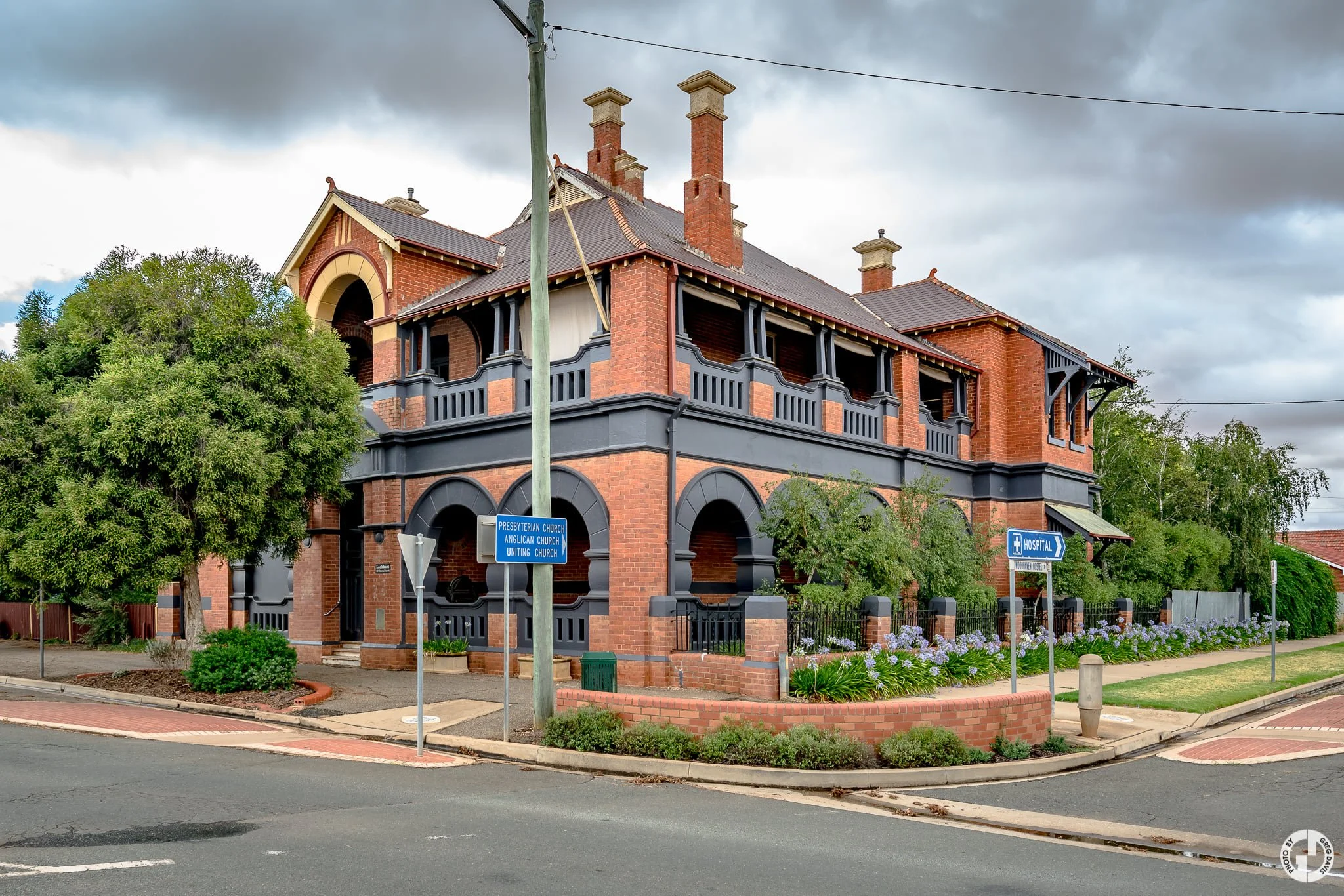
The former Commercial Banking Company of Sydney (later NAB) building is perhaps the most audacious of the lot. When the CBC Bank decided in 1909 that their existing premises weren't grand enough, they spent the then-staggering sum of £2,000 on a corner site, engaged Cootamundra architect Ernest R. Laver, and set about building something befitting what was described as one of the bank's largest premises in southwest NSW. The resulting two-storey brick building required 250,000 bricks - all manufactured locally by one J.A. Brown - and took from January 1911 to March 1912 to complete. The first floor housed the bank manager's residence, complete with a maid's room and a wrap-around corner verandah. The stables were out the back.
The bank eventually became NAB, then sold the building in 1998. It spent time as an antique store and a B&B before the agency permanently closed in 2018. Today it just watches the world go by from that corner, looking exactly as magnificent as it did in 1912.
A few doors down, the former Commonwealth Bank tells a different story. The Government Savings Bank opened here in 1927, built their own premises on Green Street, and ran a perfectly serviceable branch — until 1938, when the bank's architects decided the building was too plain and gave it a full Art Deco makeover.
The rendered façade and decorative detailing were completed in January 1939 and the branch traded in its upgraded form all the way until closing in late 2019. You can still read the design language of that 1930s renovation in the façade today.
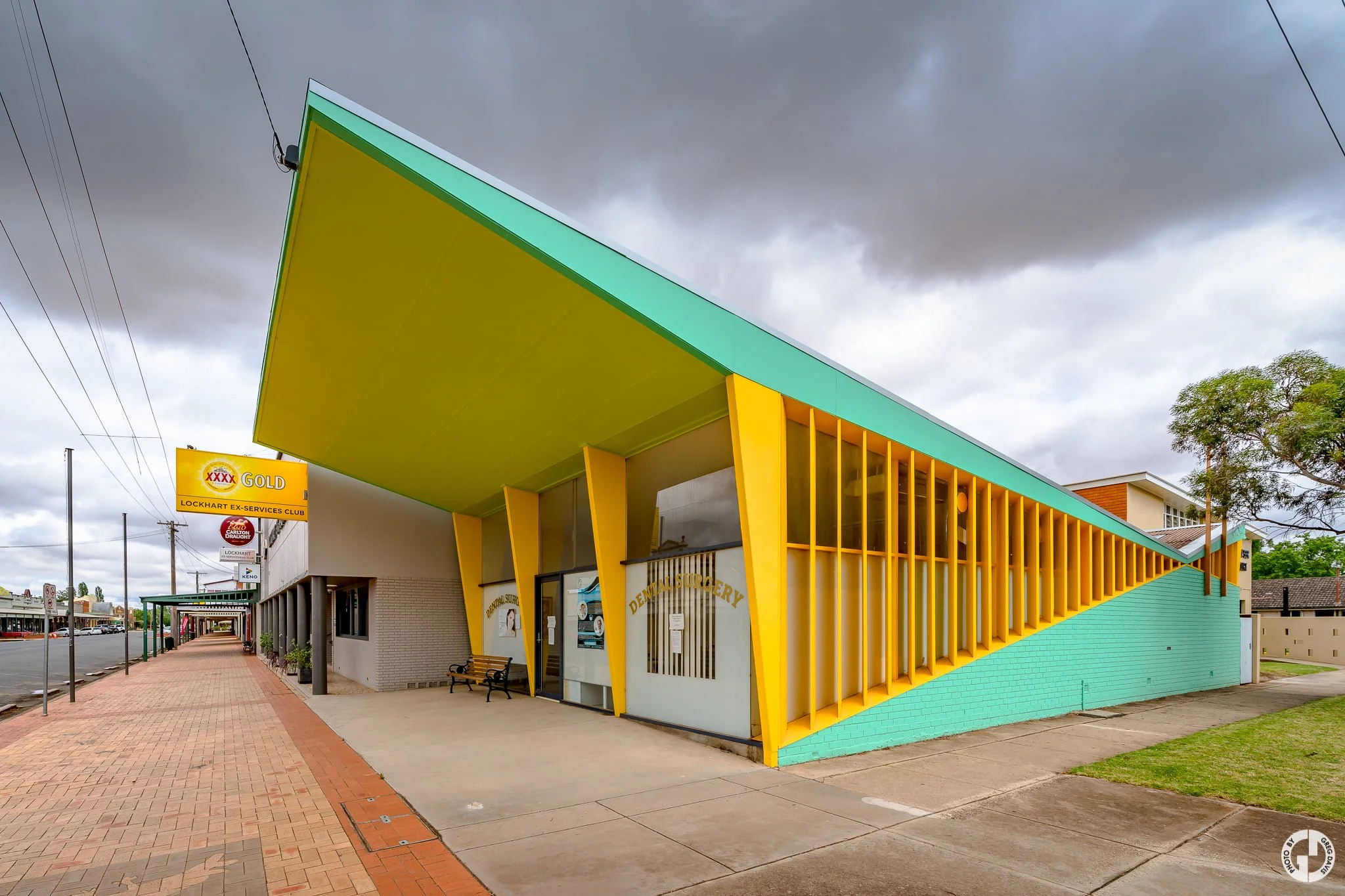
Then there's what might be the most controversial building on the street: the former ES&A Bank, later ANZ, now a dental surgery. In 1954, when every other building on Green Street was dignified Federation or inter-war brick, Melbourne architect G.F. Danne designed something that genuinely shocked the locals — angular lines, a wall of glass, and timber fins. It was the architectural equivalent of showing up to a country funeral in a neon tracksuit. The branch closed not long after the ES&A merged with ANZ in 1970, and in 1973 the Council converted it to a dental surgery. Almost fifty years later, it's still a dental surgery. Somehow this feels like the most Lockhart outcome possible.
The Pub That Opened with an Oyster Bar (and Other Hotel Tales)
By 1906, Lockhart had four hotels serving its population - a fact the town's historian notes was catering "mainly [to] men!" with a candour that deserves its own heritage listing.
The most storied of the lot is the building now known as the former New Gunyah Hotel. The site's history goes back to 1878, when a publican named George Ferrier received a licence for the Bookong Hotel — a Cobb & Co staging stop and mail coach calling point that also doubled as a post office under the name Ferrier's. Over subsequent decades, the hotel changed names and owners until by the 1930s, Tooth & Co had acquired it and decided the building needed replacing.
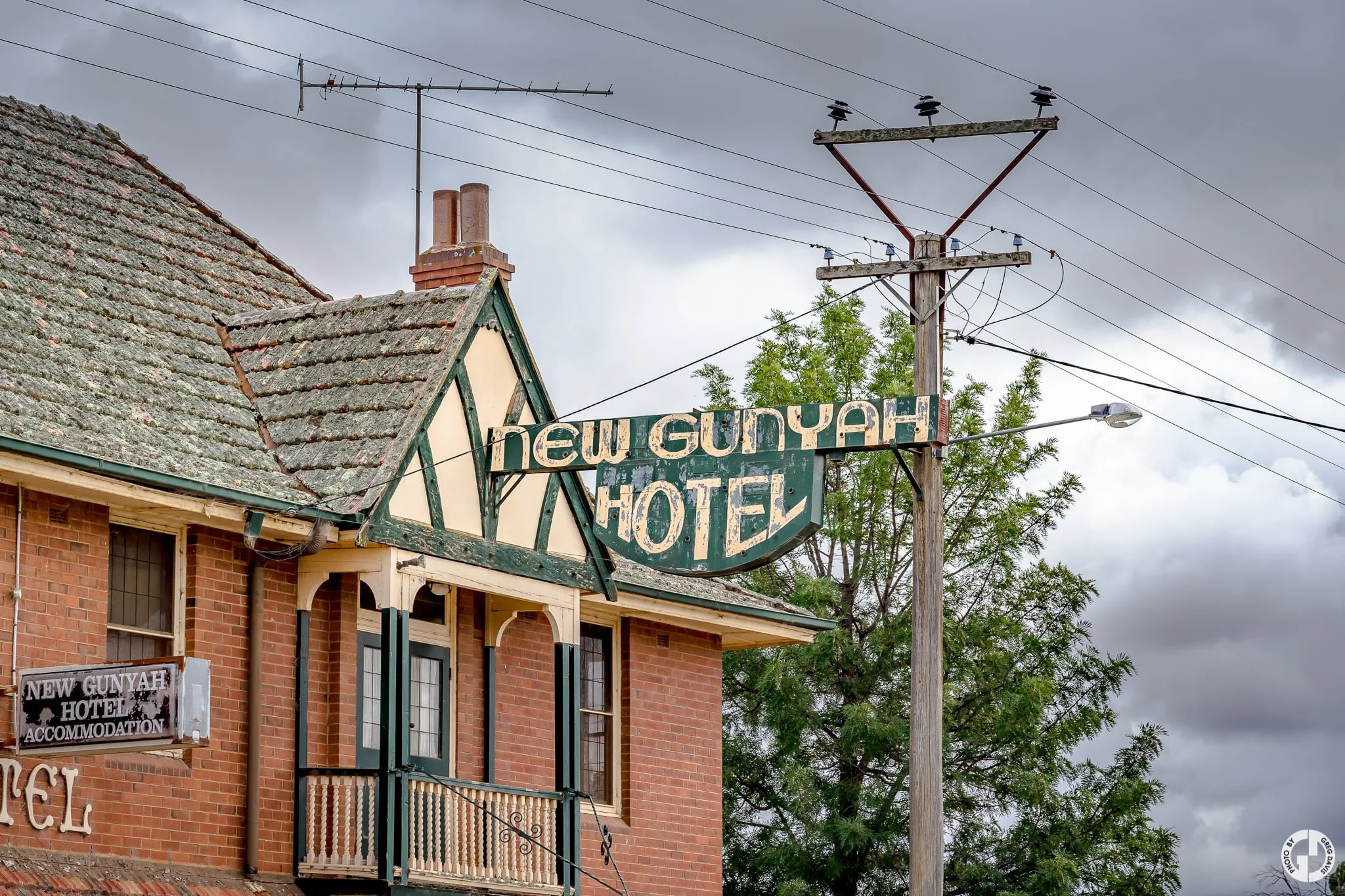
For the new build, Tooth & Co engaged Sydney architects Joy and Pollit, who had designed dozens of hotels for the company, mostly in the Art Deco style. For reasons that remain genuinely unexplained, they chose to go Tudor/Old English for Lockhart. The result, which opened in August 1939 as the New Gunyah Hotel, was a two-storey brick building with a large bar (three separate entrances), a dozen bedrooms with hot and cold running water, a colonnade lounge — and, wonderfully, a telephone booth inside the bar. The hotel traded until 1999, when declining population saw it de-licensed. It's now a private residence.
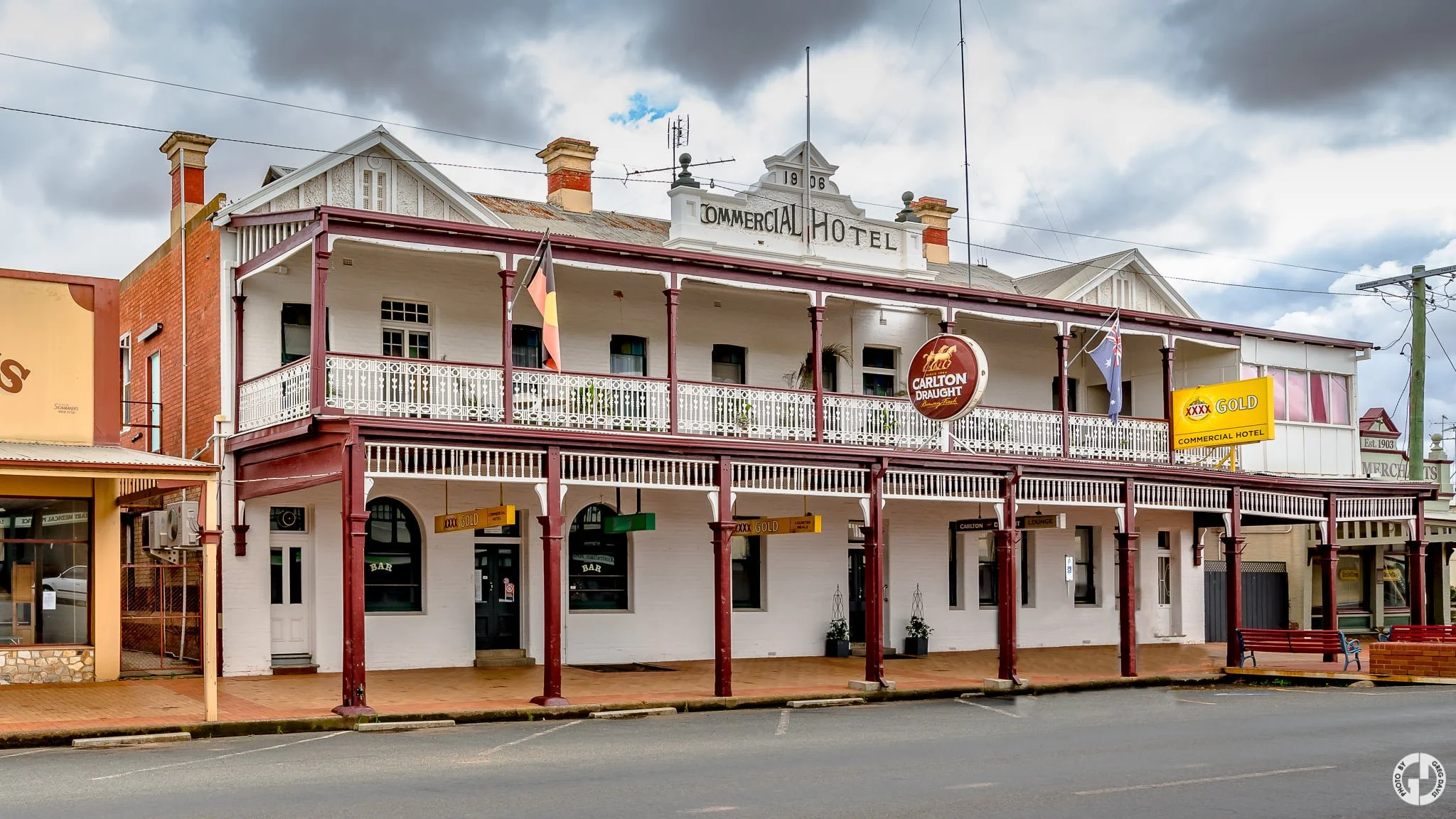
The Railway Hotel, built in 1901 to coincide with the opening of the new train line, has a simpler but no less entertaining history. By 1950, the licensing authorities had officially described it as being "in a dilapidated condition." It's still trading today. Respect where respect is due.
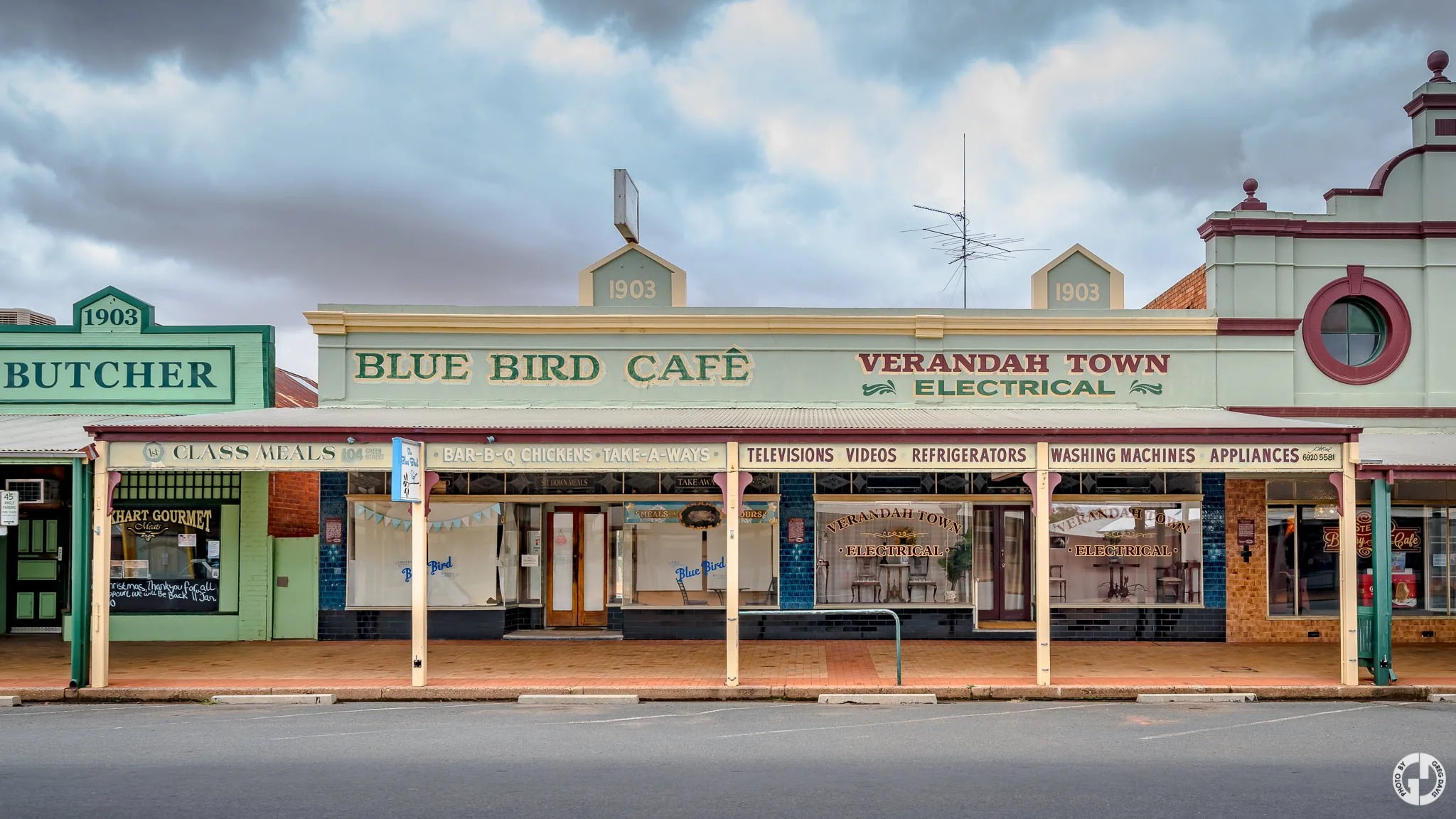
And then there's the building that started as the Marathon Saloon and Oyster Bar in 1906 — yes, an oyster bar, in inland NSW, at the turn of the century — before eventually being transformed by the Veneris family into the Blue Bird Café.
The fit-out was full Art Deco: dining booths, fan-shaped mirrors, a soda fountain. Four generations of the same family worked the business for nearly 70 years, the two Veneris brothers reportedly working seven days a week to keep it going. When Jack and Peter retired and sold in 2003, they'd been at it since 1950. The café has changed hands several times since and appears to have been closed since around 2016 — but the building, and the story, remain.
The Memorial That Kept Getting Hit By Cars
Not every story in Lockhart is architectural. Some are just deeply, lovably human.
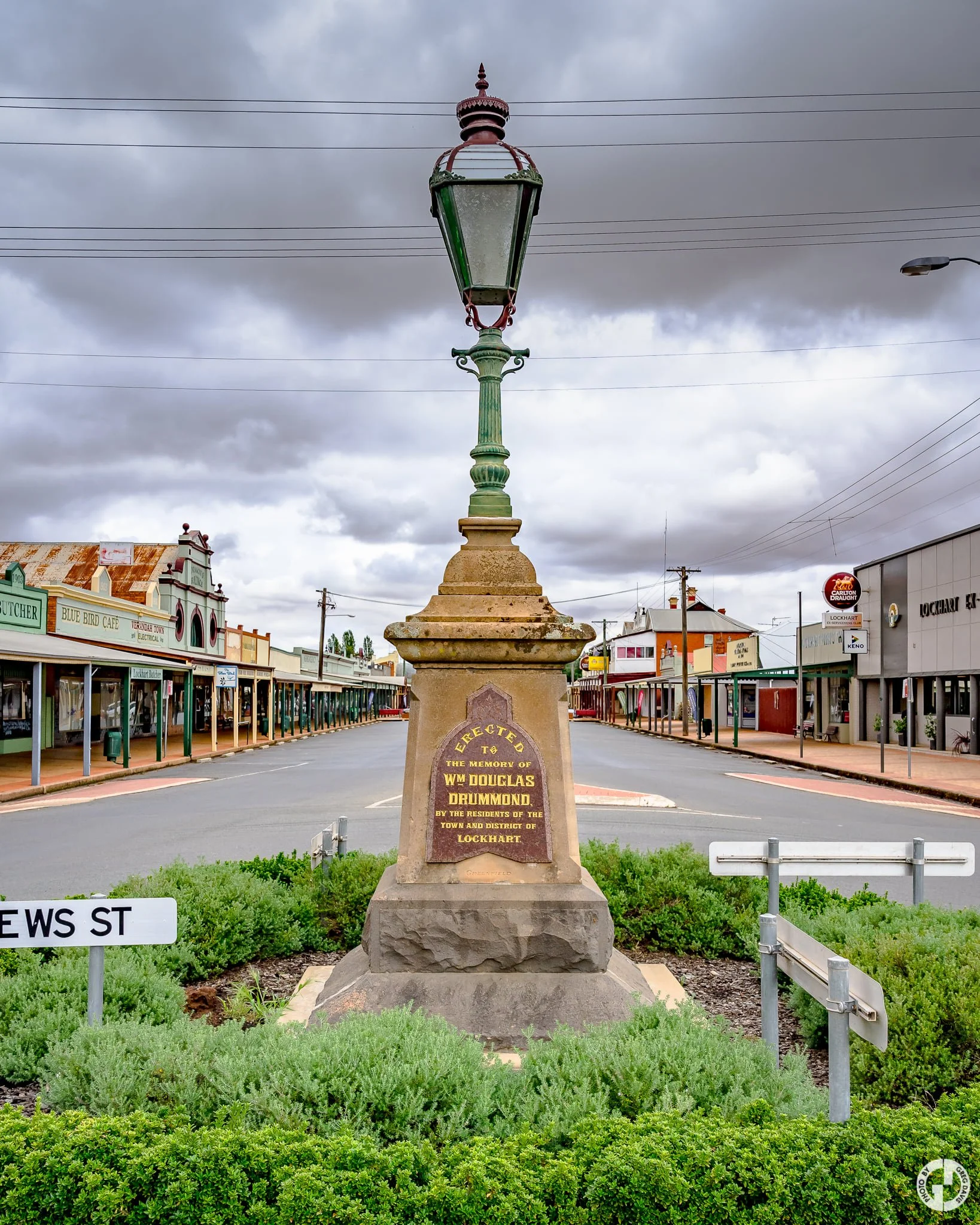
William Douglas Drummond was a well-regarded local identity who died in January 1909 at age 42, following — and there's no delicate way to put this — resolvinga gentlemanly dispute with another man over the use of a railway truck. A public subscription was raised, an Albury stonemason was engaged, and a handsome memorial lamp was erected at the main intersection of Green Street, powered by the Shire's acetylene gas generator.
Within five years, the memorial had been hit by enough vehicles that the Council decided in 1914 to relocate it to the Recreation Ground for safekeeping. There it stood until 1996, when it was moved back to its original position — this time protected by a new roundabout, and running on electricity rather than acetylene gas.
The whole saga took 87 years to resolve. The lamp still stands.
The Water Tower Worth Walking Around
In August 1944, Lockhart got something most towns take entirely for granted: a reliable water supply. Before that, nothing.
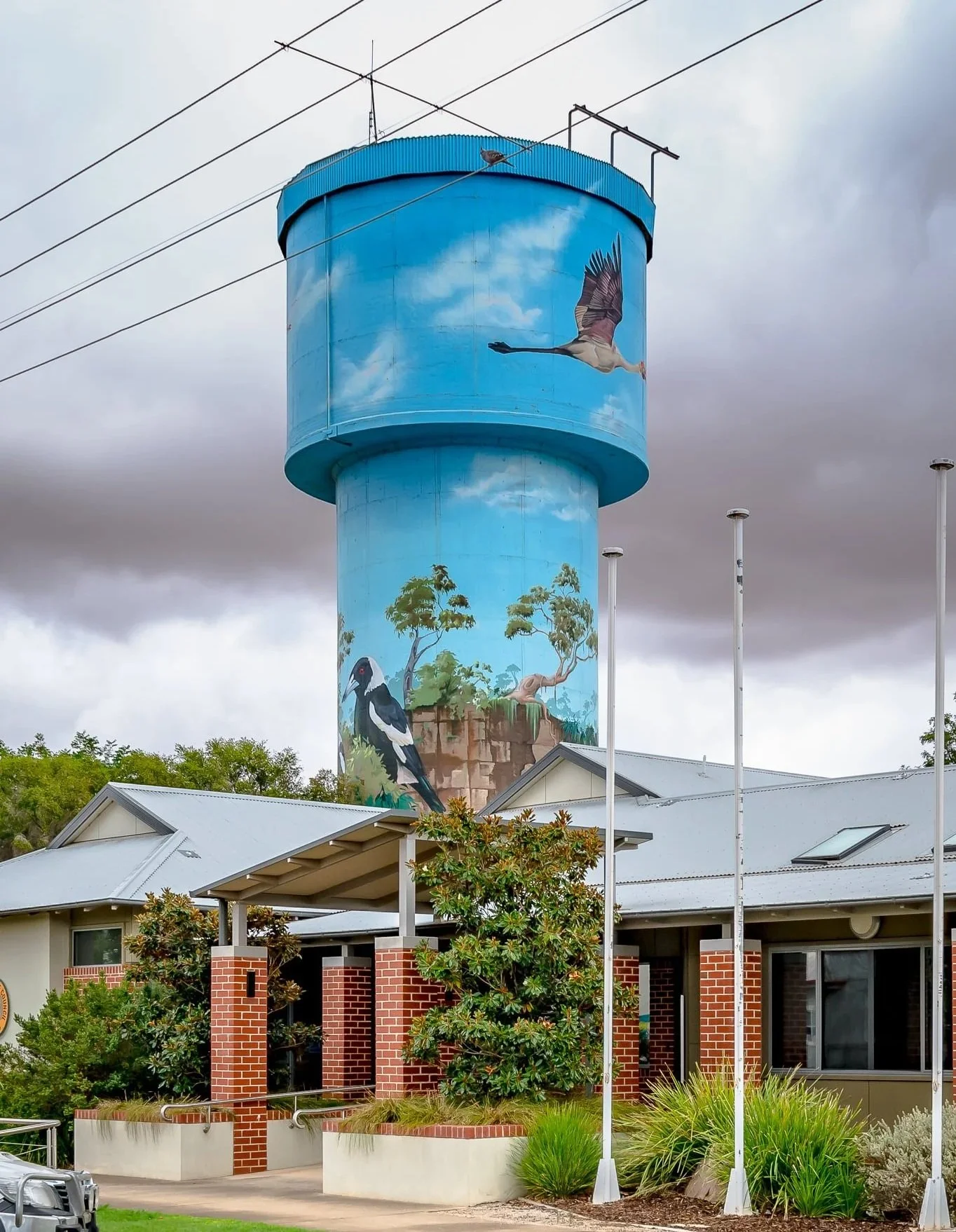
Today, the town's water tower carries one of the Riverina's more quietly spectacular pieces of public art. In late 2018, artists Scott Nagy and Janne Birkner (Krimsone) painted the tower over just three weeks with a cascading waterfall design surrounded by local flora and fauna. You need to walk the full circumference as the artwork changes depending on where you're standing. It's worth the extra few minutes.
Bushrangers, Caves and a Hill Called Galore
If the main street is Lockhart's architectural story, then Galore Hill Scenic Reserve — just 13 kilometres from town off the Sturt Highway — is its wild chapter.
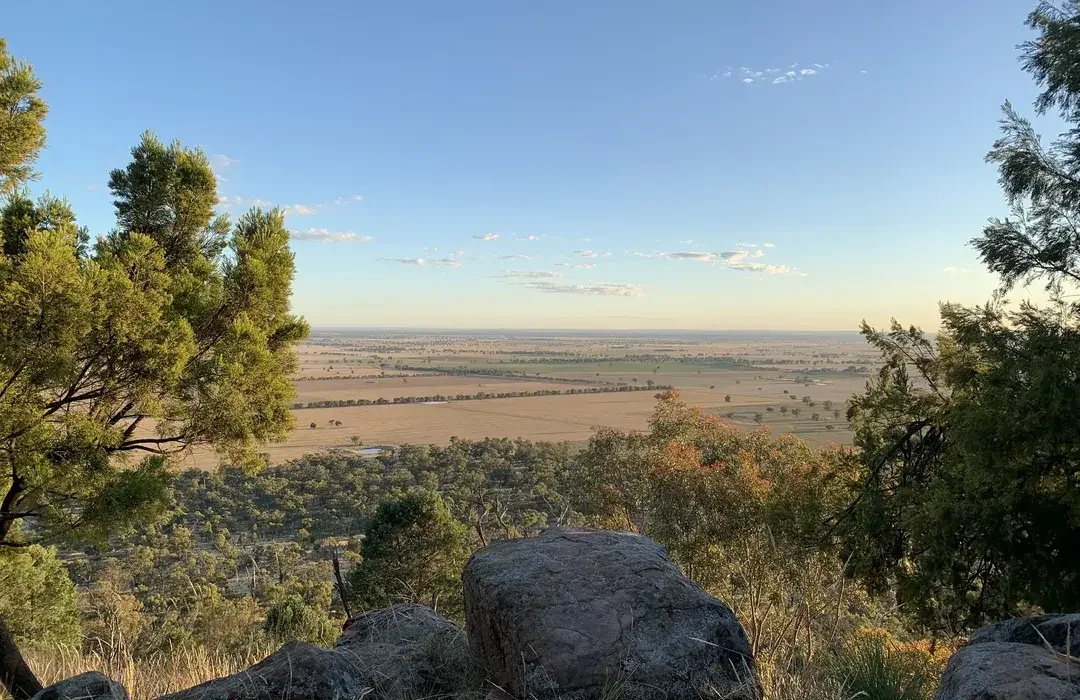
Rising over 200 metres above the surrounding plains, Galore Hill is an impressive granite outcrop covering more than 500 hectares of thriving bushland. Drive to the Summit, climb the lookout tower, and on a clear day you'll be rewarded with a 360-degree panorama across the flat Riverina plains — on the clearest days, the distant silhouette of the Snowy Mountains is visible on the horizon.
But the real draw, beyond the kangaroos, echidnas, black cockatoos and over 850 varieties of native plants, is the caves on the northern face of the hill. These are the hideouts of one of colonial Australia's most infamous — and genuinely terrifying — outlaws: Daniel Morgan, known to history as 'Mad Dog' Morgan.
In the 1860s, the surrounds of Lockhart were home to one of Australia's most notorious bushrangers. Morgan terrorised the Riverina district through the early 1860s, operating across New South Wales and northern Victoria. Wanted for armed robberies, cattle theft and the murders of at least four men including two constables, he carried a government bounty of £1,000 on his head by the time he was finally shot at Peechelba Station in Victoria in April 1865. Unlike the romanticised folklore surrounding Ned Kelly, Morgan was widely feared rather than celebrated — even colonial newspapers described him as "the most bloodthirsty of all highway robbers."
What makes the Lockhart connection so vivid is that these caves weren't just passing cover — they were a deliberate refuge. Morgan's superior bushcraft and deep knowledge of the landscape made Galore Hill an ideal base from which to evade the authorities hunting him. Signed walking tracks now lead visitors through the exact same terrain, past the caves where one of Australia's most wanted men once hid in the dark, listening for the sound of hooves.
One small footnote worth knowing: the nickname 'Mad Dog' wasn't actually used during Morgan's lifetime. The epithet was popularised by the 1976 Australian film Mad Dog Morgan, starring Dennis Hopper, which embedded the name permanently in the nation's outlaw folklore. The caves, however, are entirely real — and entirely worth the walk.
Galore Hill Scenic Reserve is free to visit, with BBQ facilities, picnic areas and a children's playground at both the Summit and the Saddle. The walking track to Morgan's Caves takes around 45 minutes at a leisurely pace, with signed paths throughout. Keep an eye out for grey kangaroos and wallabies along the trail.
The Woman Who Paints With Wool
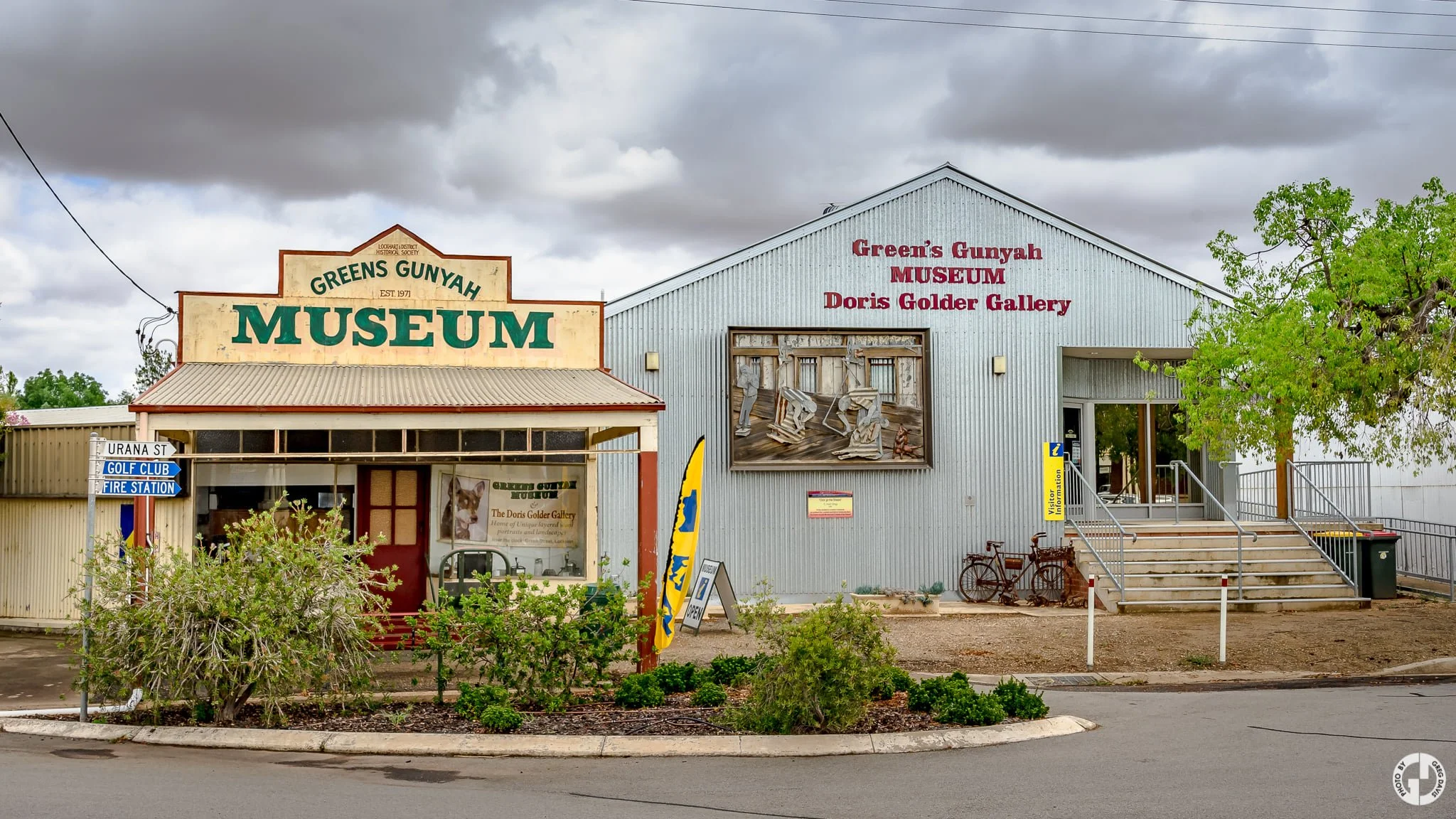
Before you leave, stop in at the Greens Gunyah Museum on Urana Street — home to the Lockhart Shire Visitor Information Centre, the remarkable Doris Golder Wool Art Gallery (portraits made entirely from layered natural wool fleece — genuinely unlike anything else in the country), and artefacts from the historic 1888 Brookong Station Shearer's Strike. Open Monday to Saturday, 10am–2pm.
Doris Golder is a Lockhart local who, from the early 1980s, began creating something genuinely unlike anything else in the country: life-sized portraits of Australian icons, built entirely from naturally coloured, washed, combed and undyed sheep's wool. No paint. No dye. Just fleece, layered fibre by fibre by hand, each portrait taking up to five months to complete.
Her subjects read like a very Australian guest list — Slim Dusty, Greg Norman, Bob Hawke, Dame Joan Sutherland, Paul Hogan, Ita Buttrose, Rupert Murdoch, Tim Fischer. The Fred Hollows family was among her last. Some of her portraits hang in Parliament House in Canberra. A self-taught artist who grew up at Booerie Creek and went to school in Albury, Doris created more than 30 works across roughly 14 years — her dining table, by all accounts, permanently buried under piles of sorted wool.
In 1996, Doris retired to Lockhart. In 2004, rather than selling her collection, she donated every single work to the Lockhart community — an act of extraordinary generosity that transformed the Greens Gunyah Museum into a genuine cultural destination. She was later awarded an Order of Australia Medal for her service to the visual arts, with particular recognition for her contribution to wool portraiture. Her OAM is also on display in the gallery.
Many of Doris's subjects have since visited the gallery to see their own portraits. Doris herself, when asked about the collection, said she was "happy they are all together like a mob of children."
How to Do Lockhart
Lockhart sits about 65km southwest of Wagga Wagga, making it an easy day trip or a natural stop on a longer Riverina road trip. The drive from Sydney is around five and a half hours, or fly into Wagga Wagga Airport and hire a car for the 45-minute drive.
Walk Green Street end to end. Give yourself at least an hour and look up — the verandah detail, parapet walls and arched windows are all up there. Informative plaques on each façade fill in the history as you go.
Circle the water tower. Do a full lap, notice how the mural shifts. Ten minutes, genuinely surprising.
Find the Drummond Memorial Lamp at the Green Street roundabout and appreciate that it survived 87 years of bureaucratic indecision and at least several vehicular incidents.
Stop at That Butchet Shop - next door to the old Blue Bird Cafe - pick up award-winning sausages for dinner
Drive 13km to Galore Hill Scenic Reserve. Walk the signed trail to Morgan's Caves, climb the lookout tower for 360-degree views, and try to spot a wallaby. Free entry. Worth every minute.
Visit the Greens Gunyah Museum. Urana Street, open Monday to Saturday 10am–2pm. Don't skip the Doris Golder Wool Art Gallery — it's unlike anything else you'll find in regional NSW.
For anyone with an interest in Australian history, architecture, a good bushranger story, or just the pleasure of a town that wears its past openly and without apology, Lockhart is one of the Riverina's best days out.
Image credits: Explored Visions GC